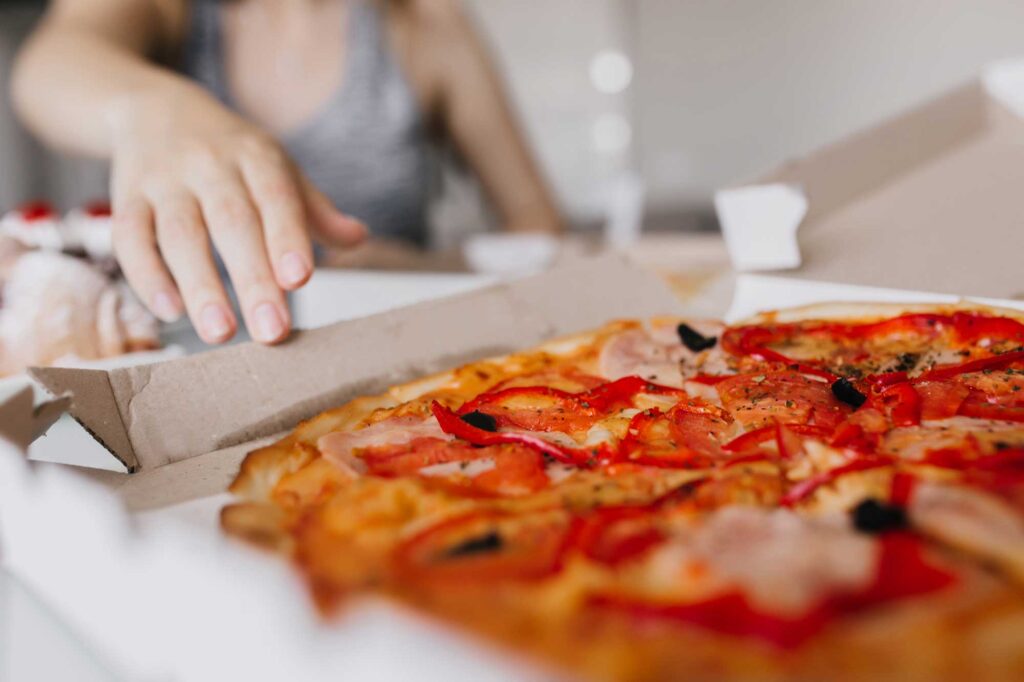
The story of pasta in Italy goes back thousands of years. It’s said that pasta was first introduced to Italy by the Romans or possibly even by Marco Polo from China. Regardless of its origins, Italy made pasta its own. Over time, pasta evolved, becoming a symbol of Italian identity and culture. Today, it’s hard to imagine Italian cuisine without pasta, and it’s no surprise that it has become a global sensation. In Italy, pasta is more than just a meal. It’s often at the center of family gatherings, celebrations, and daily life. Each region has its unique pasta shapes and sauces, reflecting the diversity of the country’s culinary traditions. Whether it’s spaghetti, ravioli, or lasagna, pasta brings people together, offering comfort and familiarity.One of the first decisions any pasta lover must make is whether to choose fresh or dry pasta. Fresh pasta, often made from eggs and flour, is tender and has a delicate flavor. Dry pasta, made from durum wheat semolina, is firmer and holds up well with hearty sauces. Both have their place in Italian cuisine, and each offers a unique experience. Pasta comes in all shapes and sizes, each designed to complement specific sauces. Spaghetti, fettuccine, penne, and rigatoni are just a few examples. While spaghetti works well with lighter sauces, penne and rigatoni are ideal for chunky, robust sauces that cling to their ridged surfaces.
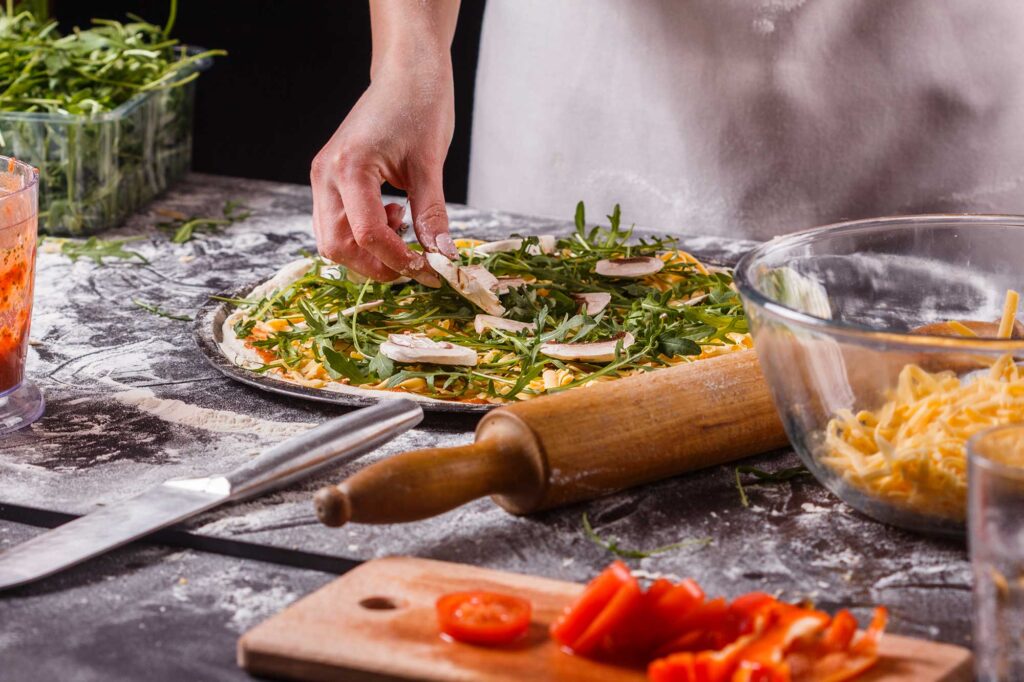
The story of pasta in Italy goes back thousands of years. It’s said that pasta was first introduced to Italy by the Romans or possibly even by Marco Polo from China. Regardless of its origins, Italy made pasta its own. Over time, pasta evolved, becoming a symbol of Italian identity and culture. Today, it’s hard to imagine Italian cuisine without pasta, and it’s no surprise that it has become a global sensation. In Italy, pasta is more than just a meal. It’s often at the center of family gatherings, celebrations, and daily life. Each region has its unique pasta shapes and sauces, reflecting the diversity of the country’s culinary traditions. Whether it’s spaghetti, ravioli, or lasagna, pasta brings people together, offering comfort and familiarity.One of the first decisions any pasta lover must make is whether to choose fresh or dry pasta. Fresh pasta, often made from eggs and flour, is tender and has a delicate flavor. Dry pasta, made from durum wheat semolina, is firmer and holds up well with hearty sauces. Both have their place in Italian cuisine, and each offers a unique experience. Pasta comes in all shapes and sizes, each designed to complement specific sauces. Spaghetti, fettuccine, penne, and rigatoni are just a few examples. While spaghetti works well with lighter sauces, penne and rigatoni are ideal for chunky, robust sauces that cling to their ridged surfaces.
The story of pasta in Italy goes back thousands of years. It’s said that pasta was first introduced to Italy by the Romans or possibly even by Marco Polo from China. Regardless of its origins, Italy made pasta its own. Over time, pasta evolved, becoming a symbol of Italian identity and culture. Today, it’s hard to imagine Italian cuisine without pasta, and it’s no surprise that it has become a global sensation. In Italy, pasta is more than just a meal. It’s often at the center of family gatherings, celebrations, and daily life. Each region has its unique pasta shapes and sauces, reflecting the diversity of the country’s culinary traditions. Whether it’s spaghetti, ravioli, or lasagna, pasta brings people together, offering comfort and familiarity.One of the first decisions any pasta lover must make is whether to choose fresh or dry pasta. Fresh pasta, often made from eggs and flour, is tender and has a delicate flavor. Dry pasta, made from durum wheat semolina, is firmer and holds up well with hearty sauces. Both have their place in Italian cuisine, and each offers a unique experience. Pasta comes in all shapes and sizes, each designed to complement specific sauces. Spaghetti, fettuccine, penne, and rigatoni are just a few examples. While spaghetti works well with lighter sauces, penne and rigatoni are ideal for chunky, robust sauces that cling to their ridged surfaces.
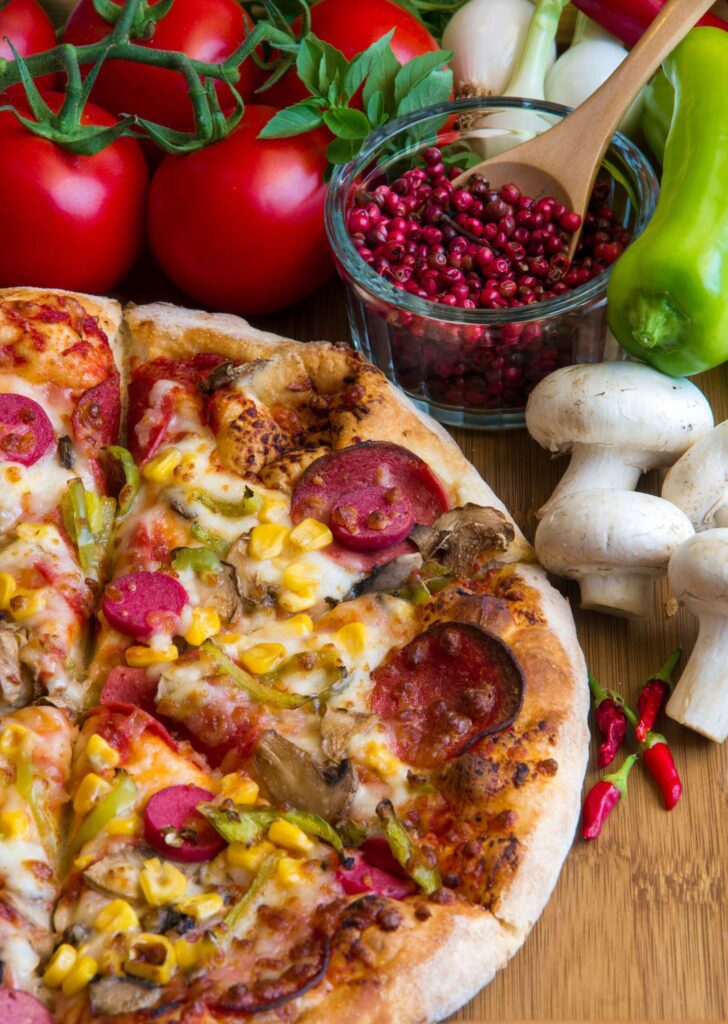
This year was an epic year for pizza! It feels like a while since I’ve been able to say that. But the truth is that while many pizza places weathered the pandemic well enough to stay afloat, there haven’t been as many exciting openings and expansions since the pre-COVID days. But that all changed in 2023. A New Haven style spot on top of a brewery in Brooklyn? Check. A hip slice joint operating out of a basketball arena? Of course. A renowned chef known for his upscale restaurants pivoting to… what else… pizza? You bet. These are just a few of the spots that made my list this year. But I’m just glad that 2023 felt like the good old days (including that darn line at Lucali, which is as long as ever). Here are the best pies I ate this year: 5) LONG HOT SHALLOT PIZZAFini PizzaBrooklyn, NY In a review of Fini earlier this year — which is attached to (but not inside) the Barclays Center — I called their pies a “Slam Dunk.” I’ll avoid any further basketball analogies in this blurb, but suffice to say that there are a lot of really incredible pies coming out of the ovens a both locations of Fini, which was started by a co-founder of Lilia. No pie is as good as their Long Hot Shallot, which is topped with hot peppers and roasted shallots, providing a one-two punch of sweet and spicy flavors on top of what is one of Brooklyn’s best new pies. 4) CHEESE PIZZADe Lucia’s Brick OvenRaritan, NJ This New Jersey spot has been serving up pies for over 100 years. But it has seen a resurgence of attention in recent years as Dave Portnoy bestowed a 9.4 rating on it (tied for 2nd highest in the country with Di Fara and Frank Peppe). It’s true — their highly regarded cheese pie is so delicious, you’ll probably want to try and finish the large on your own. The brick oven produces a crust with just the perfect amount of crispiness. And as I chomped on each bite — the simple combination of sauce and cheese elicited a sense of nostalgia. 3) FUNGHI PIZZALala’sBrooklyn, NY New Haven style pizza is under represented in New York City. And Lala’s is a welcome addition to a pizza scene that offers just about every style imaginable. Located on the rooftop of Williamsburg’s Grimm Brewery, Lala’s oval shaped pies are cut into approximately 10 small slices, making a single pie the ideal size to share between two people. The Fungi pie (shitake, maitake, thyme, mozzarella, gruyère) puts all other mushroom pizzas to shame. Pro tip: add fermented red onions and some hot honey to top it off. 2) NELLIE PIZZAStretch PizzaNew York, NY For much of his career, Wylie Dufresne has been more closely associated with molecular gastronomy than pizza, but his latest venture — Stretch Pizza — is a formidable entry into the world of sauce and cheese. After running a pandemic pop up out of Bread’s Bakery, the full service pizzeria in the Flatiron neighborhood serves up ten pies featuring non-traditional toppings such as horseradish, tempura crumbs and dan dan chicken (those are all found on different pies). While a return visit is in order to explore the menu more, I was blown away by the “Nellie” pie which is a shallot lovers dream. It features roasted shallots, pickled shallots, and fried shallots. A trifecta of perfection. 1) ALLIUM PIZZAJBGBBaltimore, Maryland JBGB (which stands for John Brown General & Butchery) doesn’t sound like a place that would be serving noteworthy pizza. But during a stop there for dinner this summer, I ordered their Allium pie (mozzarella, fontina, scallion bechamel, cipollini, sweet & sour onions, garlic oil) off of a menu that also includes a cheeseburger, steak, pork loin and fish. When the pie arrived at my table, I knew I’d made a good choice. To all of the garlic and onion lovers out there — it doesn’t get any better than this. Every bite melted in my mouth, as the scallion bechamel sauce and garlic oil formed a remarkable combination of flavors. The crispy and crunchy crust was the perfect canvas for my favorite pie of 2023.
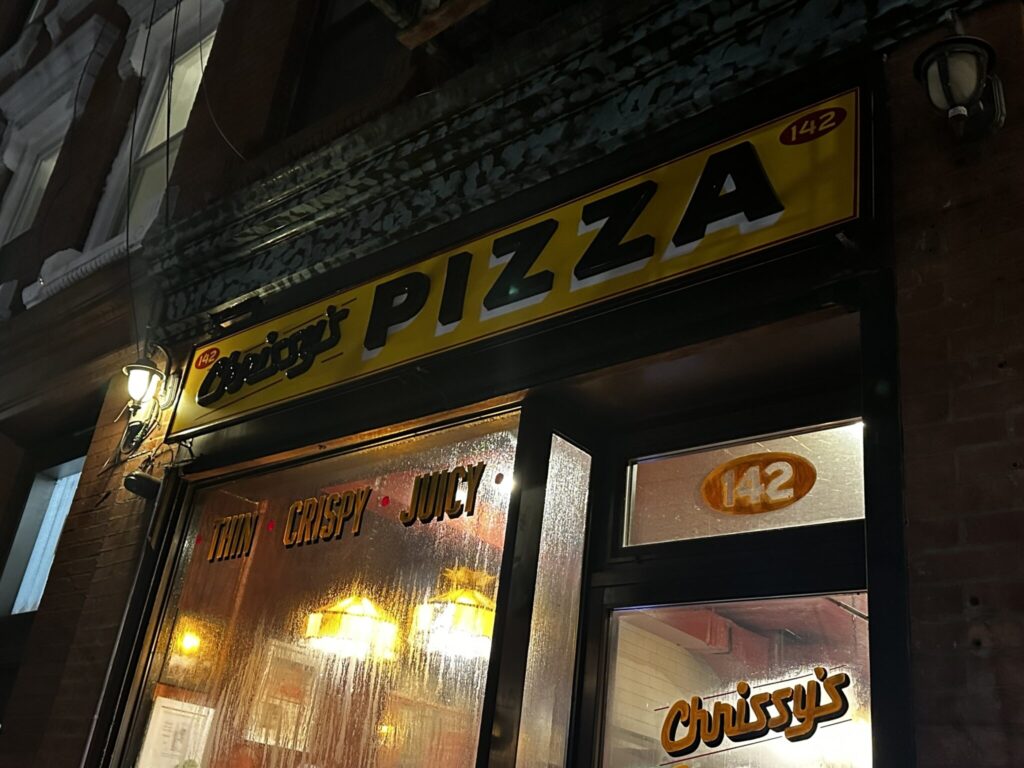
Should you trust the hype? Everyone seems to have an opinion about Chrissy’s Pizza (142 Nassau Street), which until recently held the honor of being one of New York’s most elusive pies. What started as a Bushwick apartment pop-up during the pandemic, transformed into an East Village pop-up last year, operating out of the Superiority Burger space, after hours and only on select evenings. TLDR – until recently, if you wanted to eat a pie from Chrissy’s you had to do so at midnight, and only if you were able to secure a slot online days (and occasionally weeks) in advance. As I get older, going out for pizza after my bedtime seems less and less appealing. Flash forward to the fall of 2024. Chrissy’s now has a permanent location in Greenpoint. Over the course of its first few months, there was often a line down the block. But as hours have expanded and the buzz has subsided a bit, now is a great time to see if you think all the hype was worth it. What’s Unique? Chrissy’s is definitely going for a “throwback” type vibe. While waiting for your pie to come out, it feels like you’re transformed into a scene from Stranger Things, minus the Demogorgon. But Surfer Boy Pizza, this is not. Pies start at $30 and there are only four variations on the menu: Regular, Pepperoni, Red (Vegan), and Special (the evening I was there, the special was Spicy Soppressata and Banana Peppers). There are no slices, but plenty of VHS tapes. There are no seats, but plenty of vintage signage and fixtures. None of that matters, however, if the pizza isn’t worth a trip here.

I saw an extraordinary thing at Pizza Expo in Las Vegas. Dan Richer of Razza, considered by some as the best pizzeria in the nation, was at the Ooni ovens booth demonstrating their new Halo Pro spiral mixer. It was arguably a glimpse at unbridled joy in the making of pizza dough. I know that a lot of people, newbies especially, approach pizza dough with trepidation. Some even regard dough as the enemy. Perhaps the requirement to knead dough gets the relationship off on the wrong foot. The idea of having to force water and flour to cooperate could be perceived as a kind of conflicted relationship fraught with animosity. I’ve said it before. Saying it again: pizza dough is your friend. And watching Dan Richer in action was an object lesson in feeling the joy that anyone making pizza could take to heart. We’ll be talking about the Ooni Halo in a later post. It’s one of those products that upends many ideas you may have about industrial design. (It’s a sexy beast.) Watching Dan Richer use it, however, upends many other ideas you may have about the idea that making pizza dough is drudgery. In Dan Richer’s book, The Joy Of Pizza: Everything You Need To Know, he presents a very exacting methodology that might make you wonder why he’s not working in a laboratory somewhere. And maybe, in a way, he is. The kitchen is his lab and he’s serious about it. That has served him well in building the Razza empire. If you’ll indulge me, I’m going to plagiarize myself here. Back during the 2024 year-end holidays, I recommended half a dozen different books one could give as gifts for the cooks in their life. One of those books was Mr. Richer’s. I wrote, in part: “If you think the idea of using a kitchen scale to weigh your ingredients is crazy, you’re going to find Dan Richer to be totally mad. This joyful book is about the serious work of pizza. Mr. Richer appears to be a driven man. He approaches pizza in ways that might seem extreme. He follows rigid rubrics, practices intent naming, develops relationships with everyone who supplies his ingredients, and measures each pizza emerging from his oven with a pair of calipers.” After finally seeing the man in the flesh, performing the dough-making side of things, I wouldn’t change a word of that analysis. I would add only this exhortation: read his book. He’s quite a guy, and his work is both aspirational and inspiring. I admit that I first listened to the book on Audible and it seemed very serious. (And yes, it’s ironic and perhaps weird to listen to a pizza cookbook during sessions on a treadmill at the gym.) What didn’t come across in the audio was the experience of handling that book, seeing the photos of him making pizza with his children, and witnessing the artistry not only of his pizza in action, but seeing it in a cookbook clearly intended as a valentine to the art, science and love of the craft.
The story of pasta in Italy goes back thousands of years. It’s said that pasta was first introduced to Italy by the Romans or possibly even by Marco Polo from China. Regardless of its origins, Italy made pasta its own. Over time, pasta evolved, becoming a symbol of Italian identity and culture. Today, it’s hard to imagine Italian cuisine without pasta, and it’s no surprise that it has become a global sensation. In Italy, pasta is more than just a meal. It’s often at the center of family gatherings, celebrations, and daily life. Each region has its unique pasta shapes and sauces, reflecting the diversity of the country’s culinary traditions. Whether it’s spaghetti, ravioli, or lasagna, pasta brings people together, offering comfort and familiarity.One of the first decisions any pasta lover must make is whether to choose fresh or dry pasta. Fresh pasta, often made from eggs and flour, is tender and has a delicate flavor. Dry pasta, made from durum wheat semolina, is firmer and holds up well with hearty sauces. Both have their place in Italian cuisine, and each offers a unique experience. Pasta comes in all shapes and sizes, each designed to complement specific sauces. Spaghetti, fettuccine, penne, and rigatoni are just a few examples. While spaghetti works well with lighter sauces, penne and rigatoni are ideal for chunky, robust sauces that cling to their ridged surfaces.
The story of pasta in Italy goes back thousands of years. It’s said that pasta was first introduced to Italy by the Romans or possibly even by Marco Polo from China. Regardless of its origins, Italy made pasta its own. Over time, pasta evolved, becoming a symbol of Italian identity and culture. Today, it’s hard to imagine Italian cuisine without pasta, and it’s no surprise that it has become a global sensation. In Italy, pasta is more than just a meal. It’s often at the center of family gatherings, celebrations, and daily life. Each region has its unique pasta shapes and sauces, reflecting the diversity of the country’s culinary traditions. Whether it’s spaghetti, ravioli, or lasagna, pasta brings people together, offering comfort and familiarity.One of the first decisions any pasta lover must make is whether to choose fresh or dry pasta. Fresh pasta, often made from eggs and flour, is tender and has a delicate flavor. Dry pasta, made from durum wheat semolina, is firmer and holds up well with hearty sauces. Both have their place in Italian cuisine, and each offers a unique experience. Pasta comes in all shapes and sizes, each designed to complement specific sauces. Spaghetti, fettuccine, penne, and rigatoni are just a few examples. While spaghetti works well with lighter sauces, penne and rigatoni are ideal for chunky, robust sauces that cling to their ridged surfaces.